Clarke Prize Environmental Design Challenge
BoxDrop
A cardboard return station for apartment lobbies.
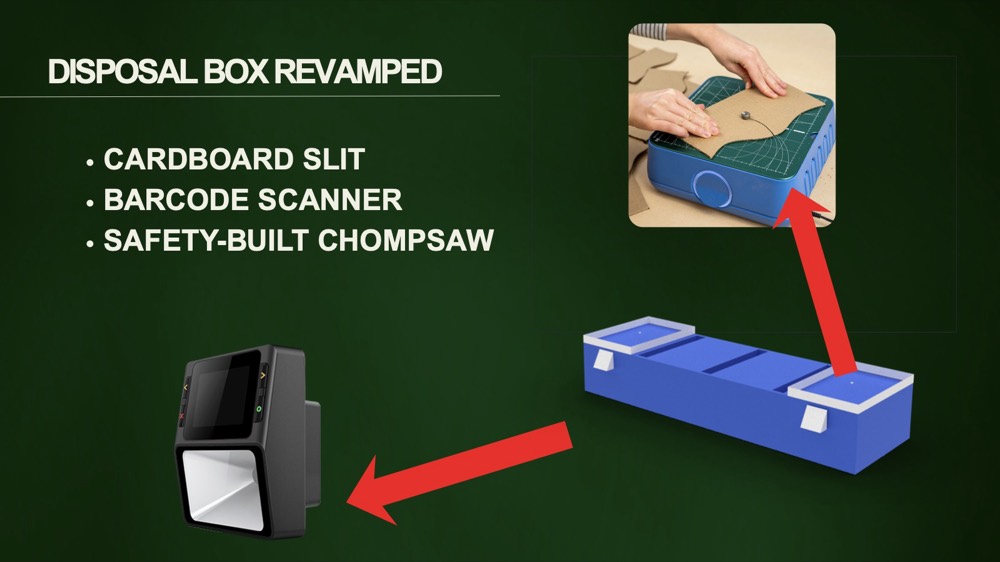
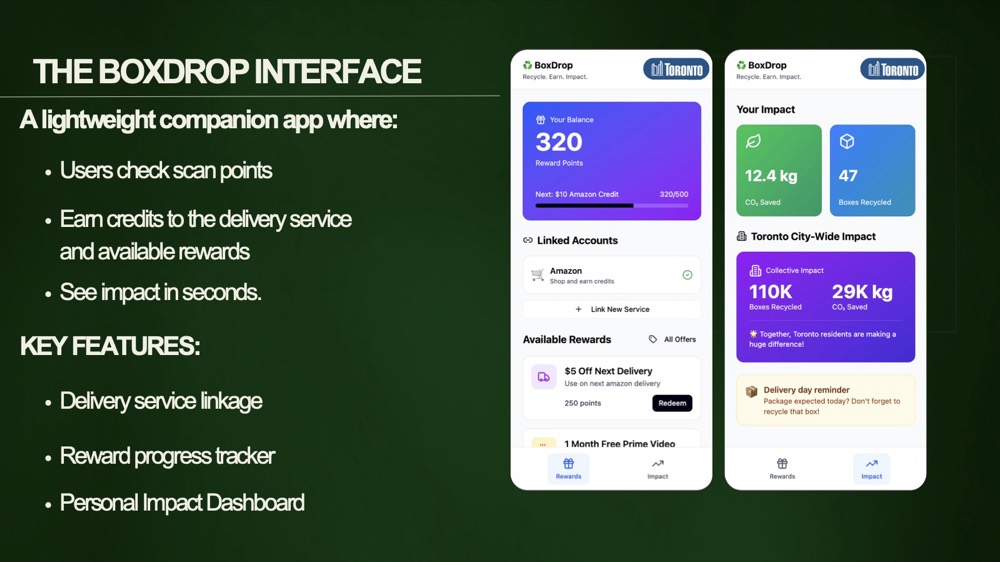
BoxDrop moves collection to the point of least friction, the lobby or mailroom, and closes the loop with a credit the resident can spend. The architecture has four parts: a station with a cutting tool, a barcode scanner and a sealed intake slot; a back end that logs each drop event against the scanned order; partner integration with delivery carriers, who buy the recovered cardboard and fund credits against future orders; and a resident app that holds the credit balance and an impact dashboard.
I worked on three of the four workstreams in a team of four. The footprint had to be slim and standardised to clear lobby fire-code circulation requirements. I also learned to design against misuse from the start, since an incentive system is only as good as the data that backs it.
From parcel pickup to cardboard return
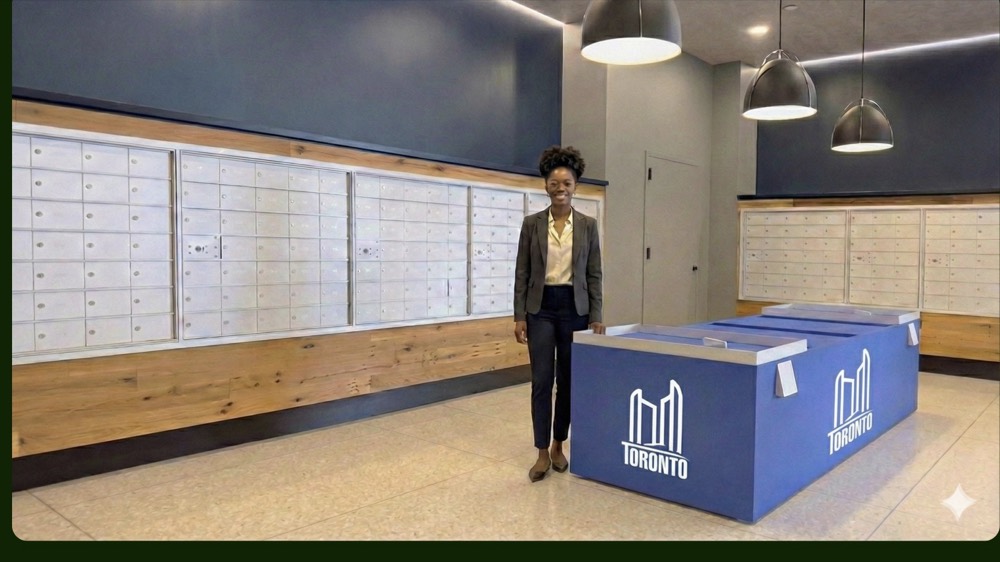
The station needed to fit beside the mailboxes while leaving the lobby circulation route clear. The proposal brought three operations into a single unit: cutting and flattening the box, scanning its label, and depositing it through a sealed slot.
What earns a credit?
A shipping label identifies an order. To earn a credit, a scan and a physical drop would have to register within the same time window. The proposal also included a daily cap and a fullness indicator so staff could service the station.
What would it cost?
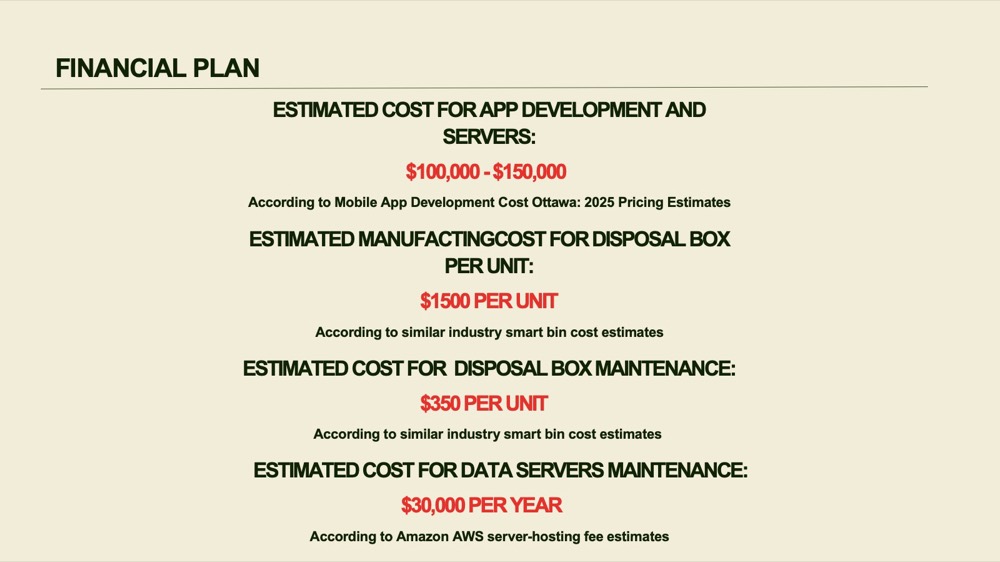
I costed the system at $100K–$150K for app and server development, $1,500 per station to manufacture, $350 per station a year in maintenance, and about $30K a year in hosting.